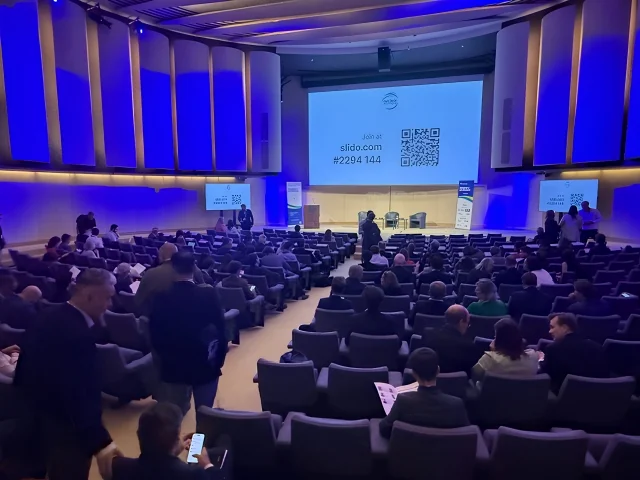

Focusing on the challenge of securing nuclear human resources, the discussion explored both shared structural issues and country-specific differences, while emphasizing the importance of engaging younger generations.
“The Biggest Challenge Is Human Resources”
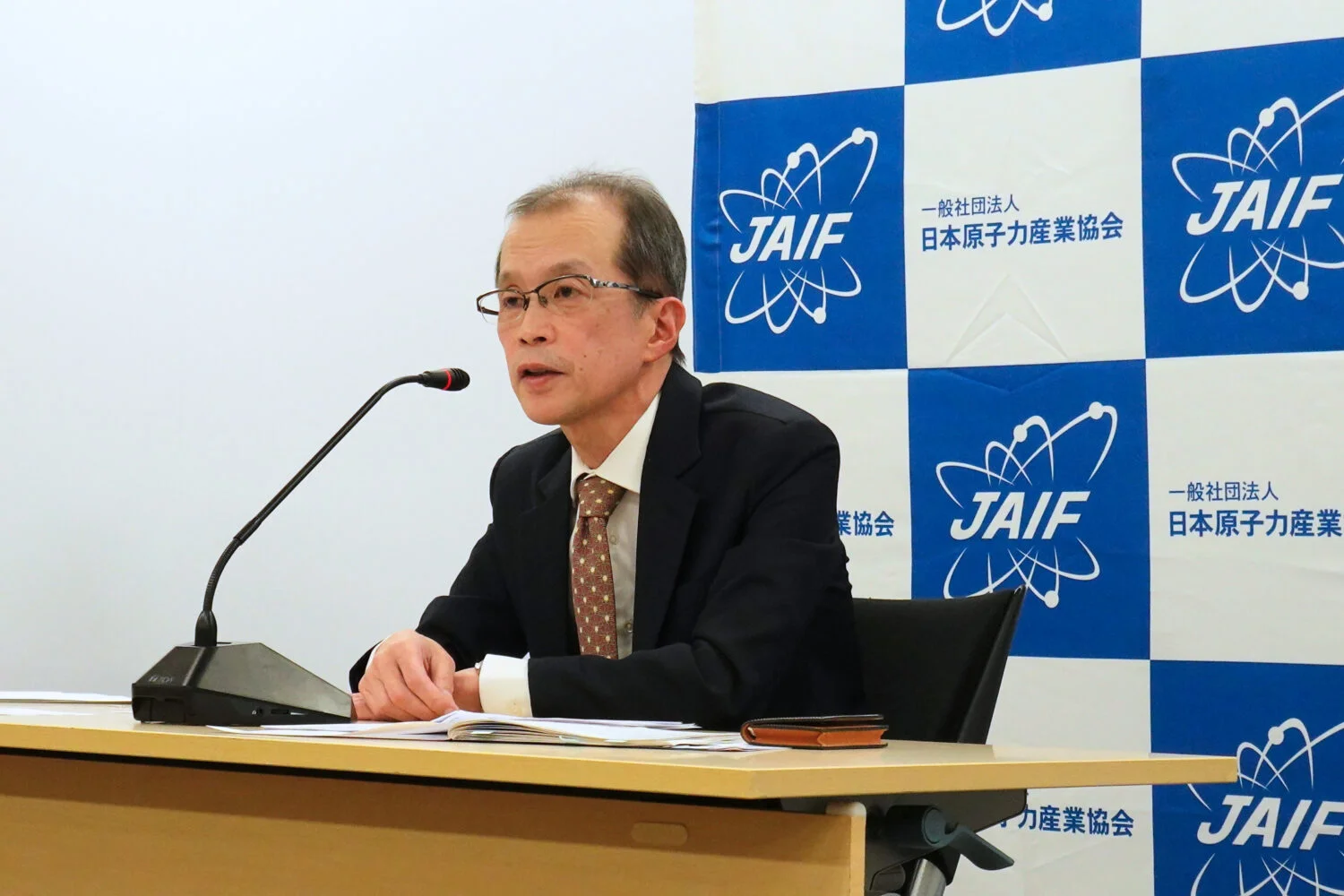
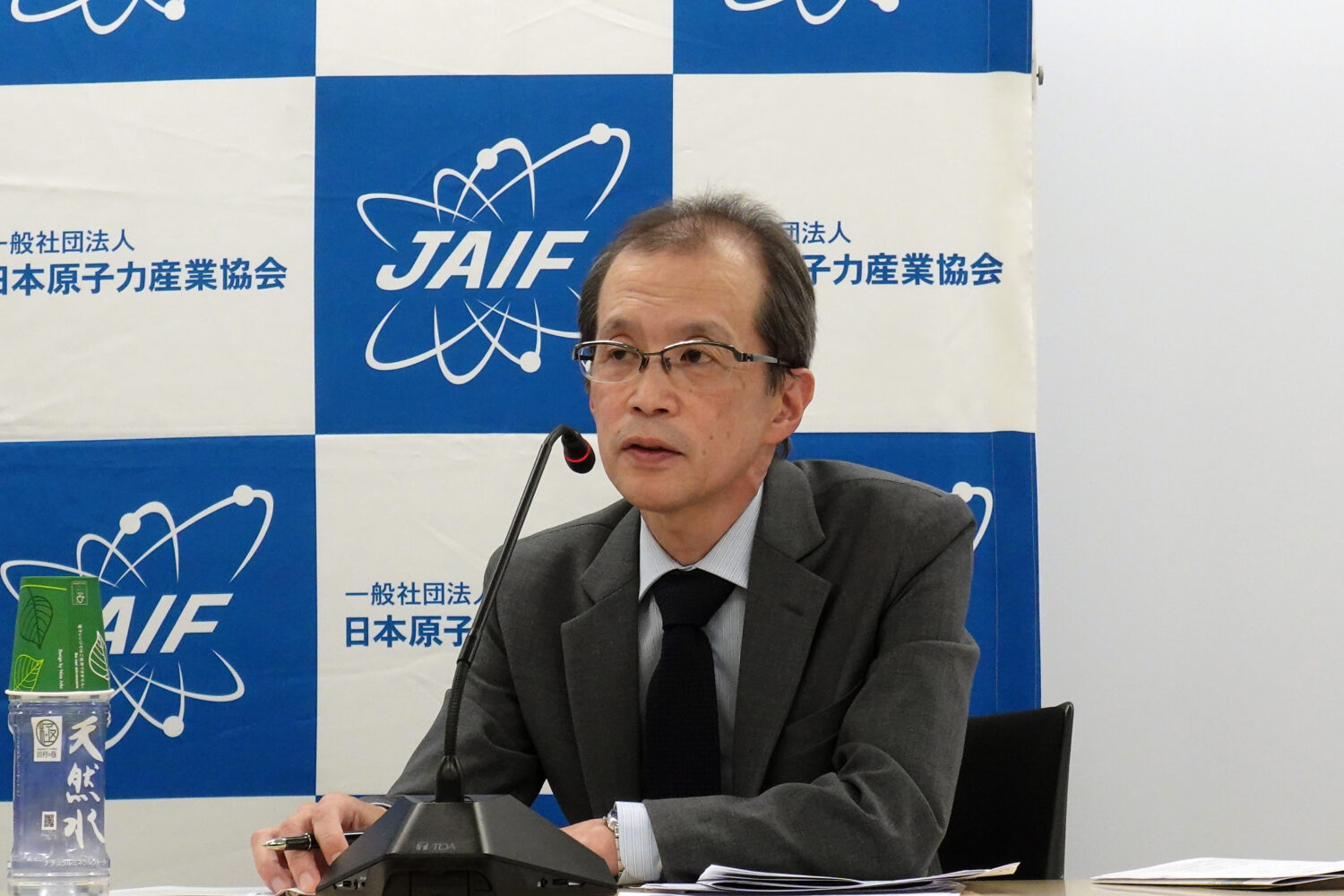
Masui opened the discussion by acknowledging positive developments in Japan, including progress in reactor restarts and renewed momentum toward new construction. However, he made clear that these developments rest on a fragile foundation.
“We have a very big issue. That is human resources.”
He pointed out that Japan’s population is declining by approximately 900,000 people annually—a scale that far exceeds the total workforce of the nuclear industry. He also referred to a survey indicating that around 80% of JAIF member companies are experiencing workforce shortages, underscoring the severity of the issue.
A Structural Dilemma Unique to Japan
Masui then articulated what he described as a structural challenge specific to Japan.
Following the Fukushima Daiichi accident, strengthened safety requirements have significantly increased workloads across design, regulatory review, manufacturing, and maintenance. At the same time, the workforce has continued to shrink.
“The Japanese nuclear industry is facing a structural dilemma between increasing work and decreasing workforce.”
This dual pressure—rising demand and shrinking supply—defines the core challenge facing Japan’s nuclear sector today.
To address this, Masui stressed that both workforce expansion and productivity improvement are indispensable. In particular, given Japan’s reliance on hiring new graduates, attracting younger generations will be critical.
Global Challenge, Different Realities
In response, Magwood agreed that workforce challenges are shared globally, but emphasized that their nature differs by region.
In the United States, student enrollment in nuclear-related fields has remained relatively stable, but shortages are becoming evident in skilled trades such as welding. In Europe, the long stagnation of the nuclear industry has weakened the pool of highly skilled nuclear professionals, making workforce rebuilding a long-term process.
Regarding Japan, Magwood pointed to the impact of the Fukushima Daiichi accident, noting that declining interest in nuclear careers and talent outflows have further intensified the situation.
The Challenge of Reaching the Next Generation
Masui also pointed to a growing gap between industry efforts and student engagement.
“The number of participating companies is increasing year after year. However, the number of students stays almost constant.”
While companies are stepping up recruitment efforts, this contrast highlights the difficulty of attracting young people to the nuclear field. It also underscores a structural challenge: even as industry demand expands, interest among younger generations is not keeping pace.
To address this, JAIF has expanded the geographic scope of its outreach efforts, holding events not only in Tokyo and Osaka, but also in Fukuoka last year, with plans to expand further to Sendai this year.
Masui further noted that, in Japan, new graduate recruitment remains the primary hiring pathway, making engagement with younger generations a critical factor for the future of the industry.
From Fragmentation to Collaboration
Masui further pointed out that similar outreach efforts are being conducted independently by utilities and other organizations.
“If these efforts were coordinated across the industry, we could achieve much greater impact.”
He emphasized the need to move from fragmented, organization-specific initiatives to a more integrated, industry-wide framework—shifting from fragmentation to collaboration.
Magwood agreed, highlighting the importance of consolidating educational content and making it accessible online. While demand for high-quality information exists, systems for delivering it in a structured and scalable way remain insufficient.
What Matters for the Future
Magwood concluded by identifying two key factors that matter most to younger generations: “future prospects” and “social significance.”
Beyond offering stable career paths, the nuclear industry must clearly communicate how its work contributes to society. He also stressed that what is needed is not promotion, but the provision of accurate and balanced information.
“What matters is not promotion, but providing accurate and balanced information.”
Creating an environment in which young people can make informed decisions will be essential for rebuilding the workforce.