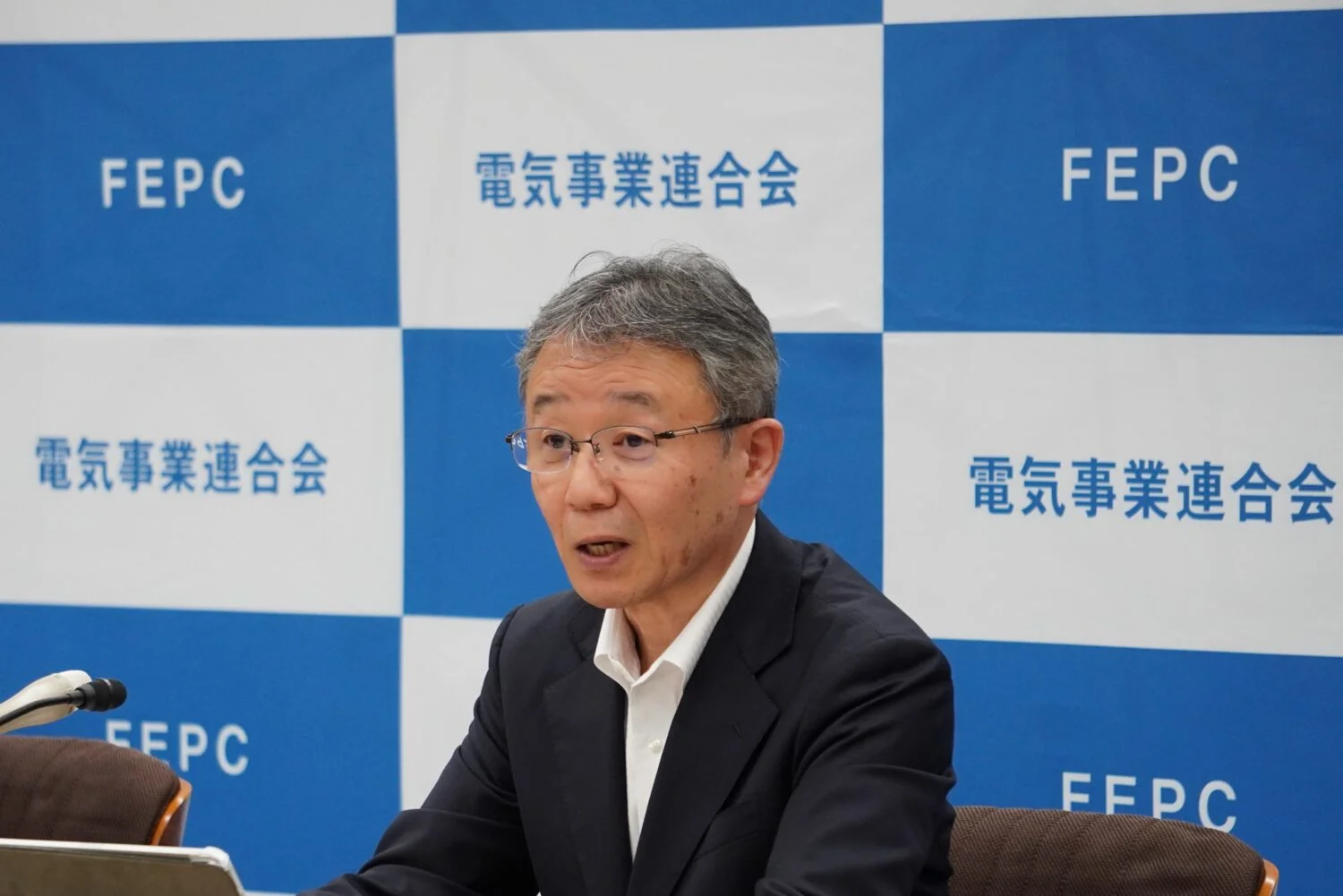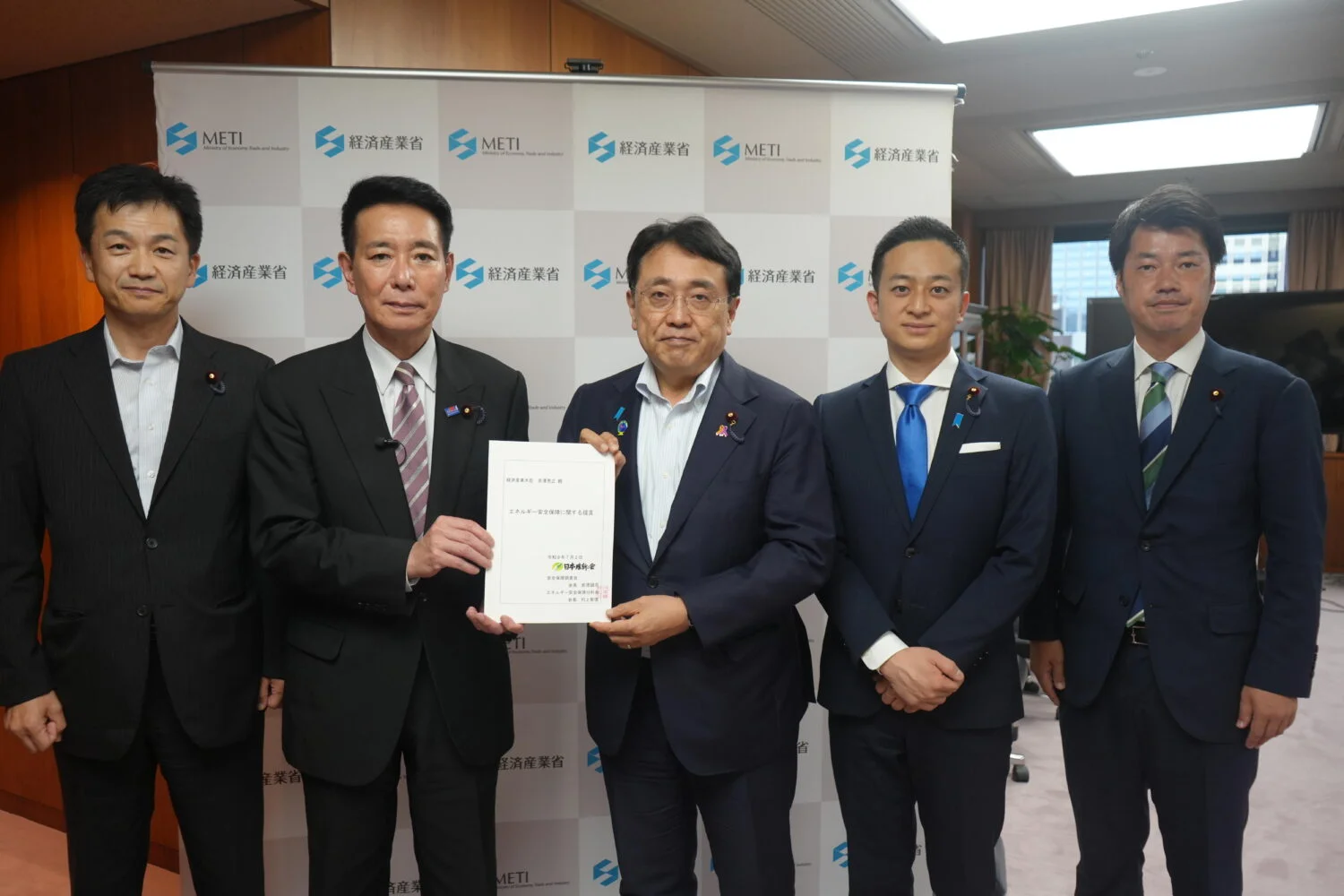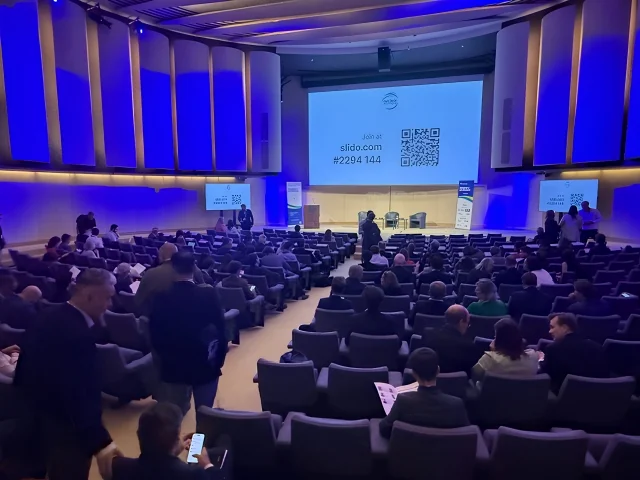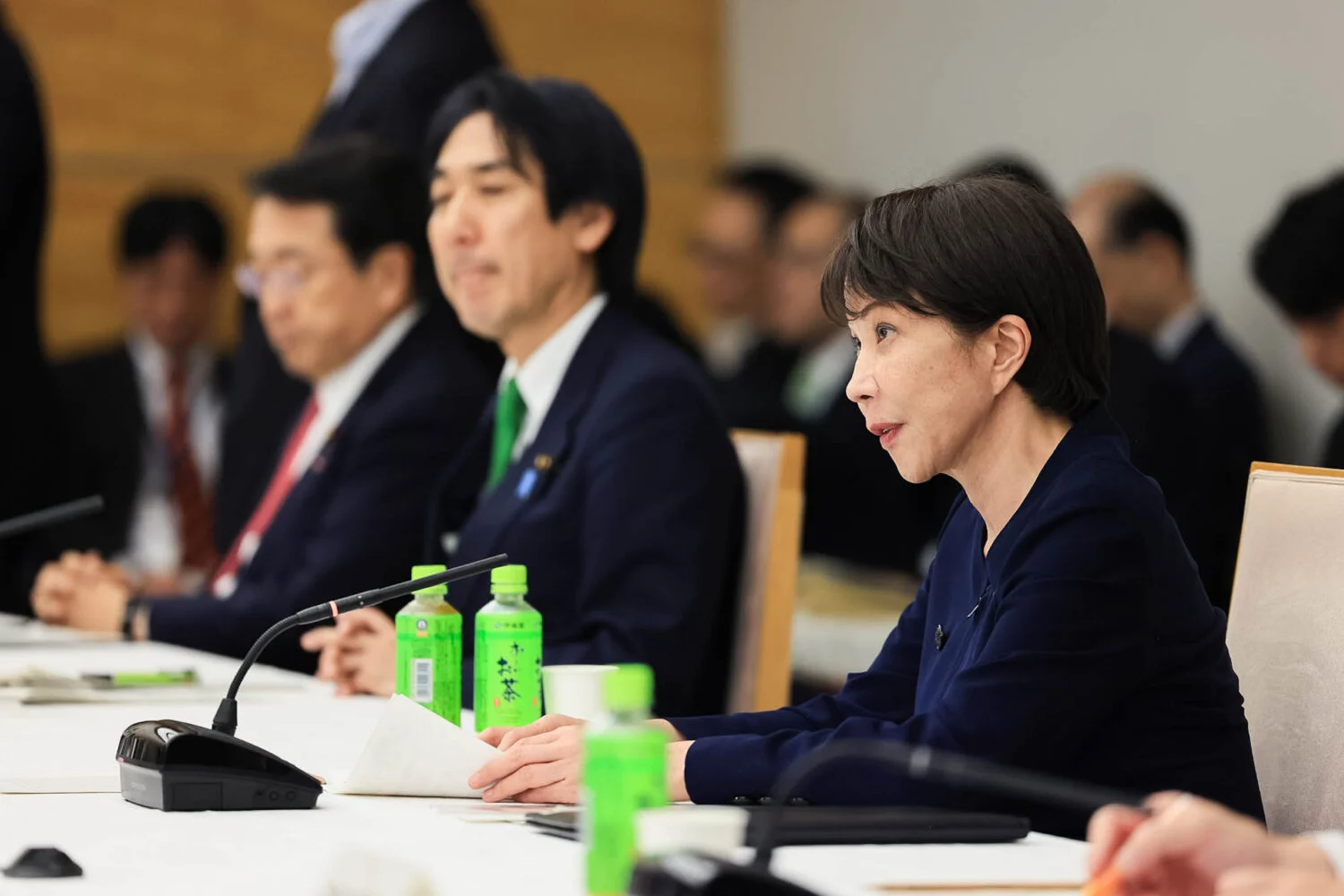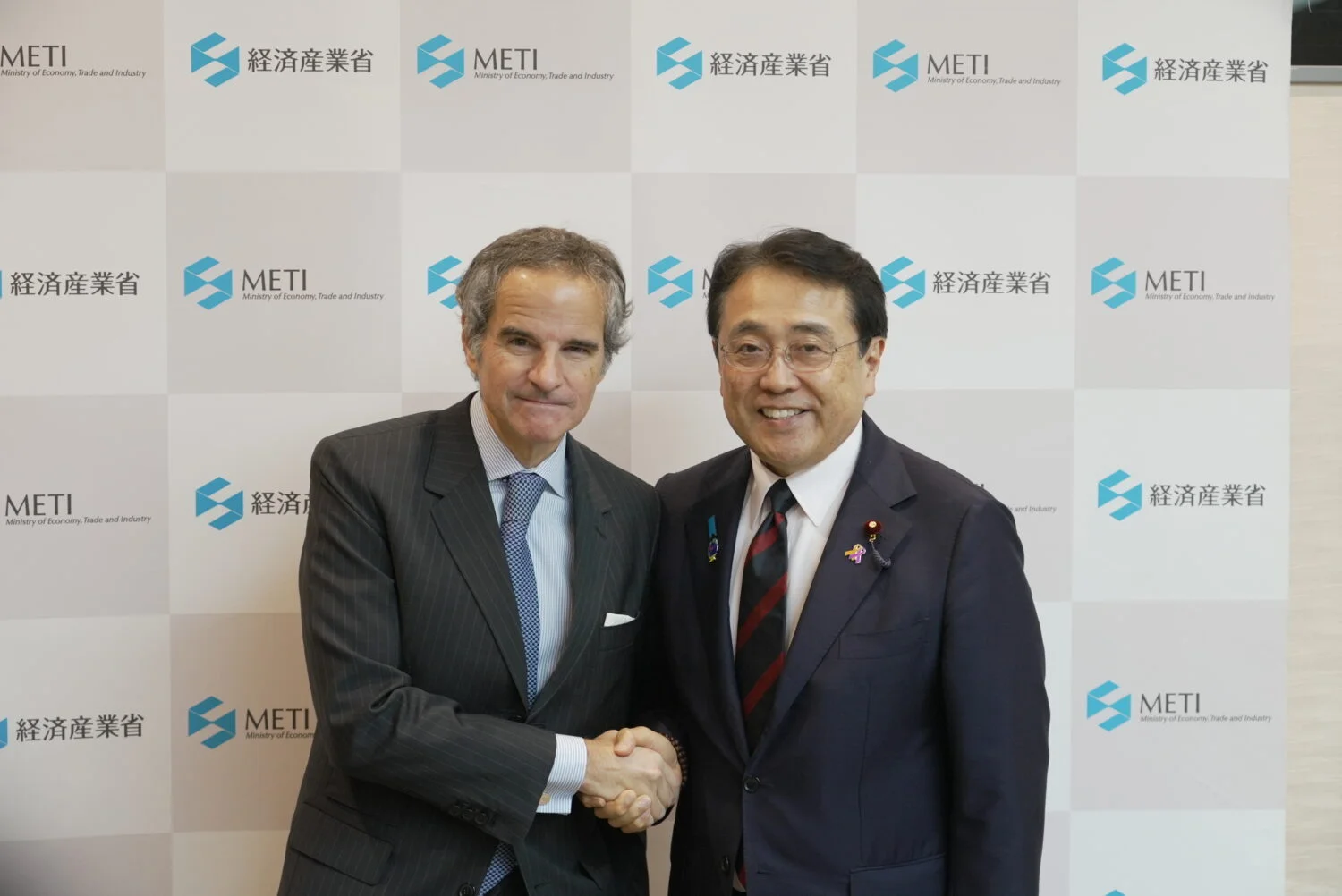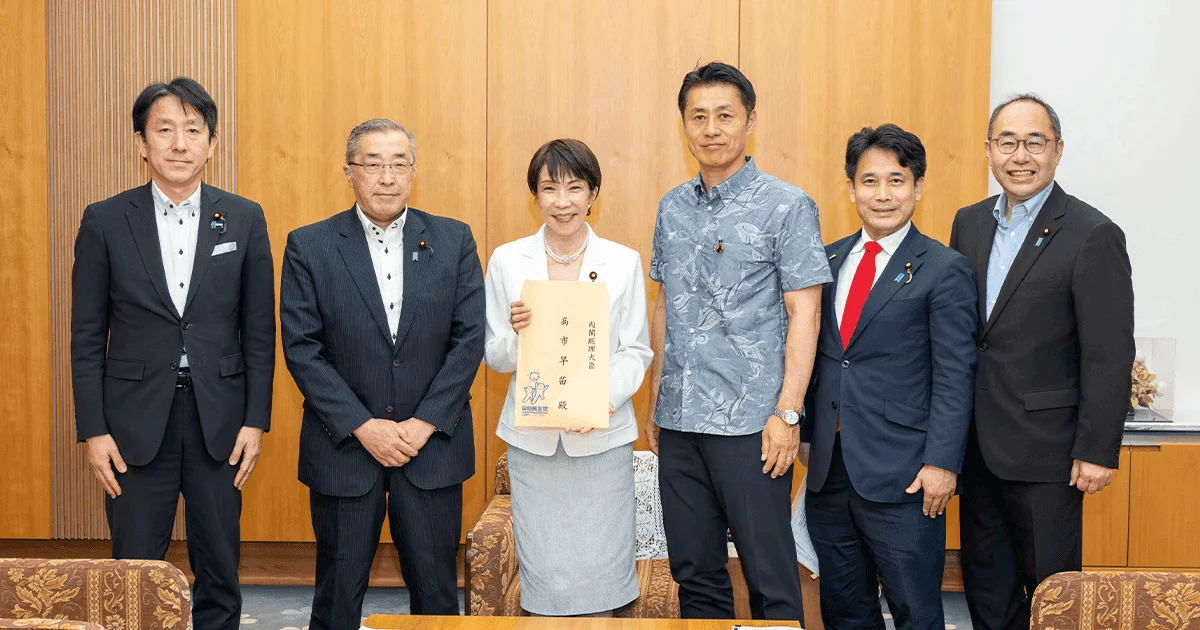

The assembly serves as a forum where mayors and other representatives from member and associate member municipalities hosting nuclear power facilities discuss proposals to the national government regarding nuclear and energy policy. This year’s meeting was attended by representatives from 28 municipalities. In the latter half of the session, INO Toshiro, State Minister of Economy, Trade and Industry, and SHIMIZU Masato, Parliamentary Vice-Minister of Education, Culture, Sports, Science and Technology, joined the discussions, along with numerous Diet members and officials from the Cabinet Office, the Nuclear Regulation Authority (NRA), the Ministry of Land, Infrastructure, Transport and Tourism, and other related agencies for exchanges of views with host communities.
Regarding Japan’s nuclear fuel cycle policy, SAITO Tomohiko, Deputy Mayor of Mutsu City, spoke about the interim spent fuel storage facility located in the city, describing it as “national infrastructure supporting Japan’s nuclear fuel cycle policy.” At the same time, he stated that “understanding of the importance of backend facilities cannot be said to be sufficient,” and called on the government to ensure “fair treatment for all facilities supporting the fuel cycle.” He also expressed views regarding the need for institutional support measures.
On the issue of nuclear reactor restarts and legal interpretations, HIROSHIMA Kazutoshi, Chairman of the Kariwa Village Assembly, and SAKURAI Masahiro, Mayor of Kashiwazaki City, made particularly pointed proposals.
Hiroshima evaluated the government’s policy to extend the deadline for the installation of Specified Severe Accident Countermeasure Facilities (Tokuju facilities), which are anti-terrorism facilities required under Japan’s post-Fukushima regulations, as “a reasonable decision.” However, regarding Unit 7 of the Kashiwazaki Kariwa Nuclear Power Plants, which was excluded from the extension because its deadline had already expired, he questioned the rationale behind the decision, saying, “I cannot understand that logic.” He further argued that “being unable to restart Kashiwazaki Kariwa Unit 7 is tantamount to leaving a valuable asset unused.”
Mayor Sakurai also reflected on discussions surrounding the restart of the plant and referred to the phrase “understanding of host communities” included in Japan’s Seventh Strategic Energy Plan. He pointed out that “there has been no clear definition of what geographical area constitutes the host community.”
While public hearings and consultations were conducted across all of Niigata Prefecture regarding the restart of the plant, Sakurai noted that “some municipalities in the prefecture are located as far as 150 kilometers from the plant.” He also referred to how such distances would compare with nuclear plants in other regions, including Fukui and Hokkaido, and questioned whether “it is reasonable to uniformly require local consent on a prefectural basis.”
He further stated that “it is abnormal for plants whose safety has been confirmed by the Nuclear Regulation Authority in accordance with the law to remain unable to operate for extended periods,” warning that prolonged delays would amount to “a national-level loss.”